Building Safety




Our team delivers comprehensive building surveying services, including Building Safety Act compliance support. With offices in London, Colchester and Manchester, we deliver projects across the UK and overseas. We help clients manage property risks, stay compliant, and protect long-term value, offering tailored, pragmatic guidance at every step of the way.






As building regulations evolve, compliance can feel complex. Our surveyors break down processes and legislation, translating technical requirements into clear, actionable guidance.
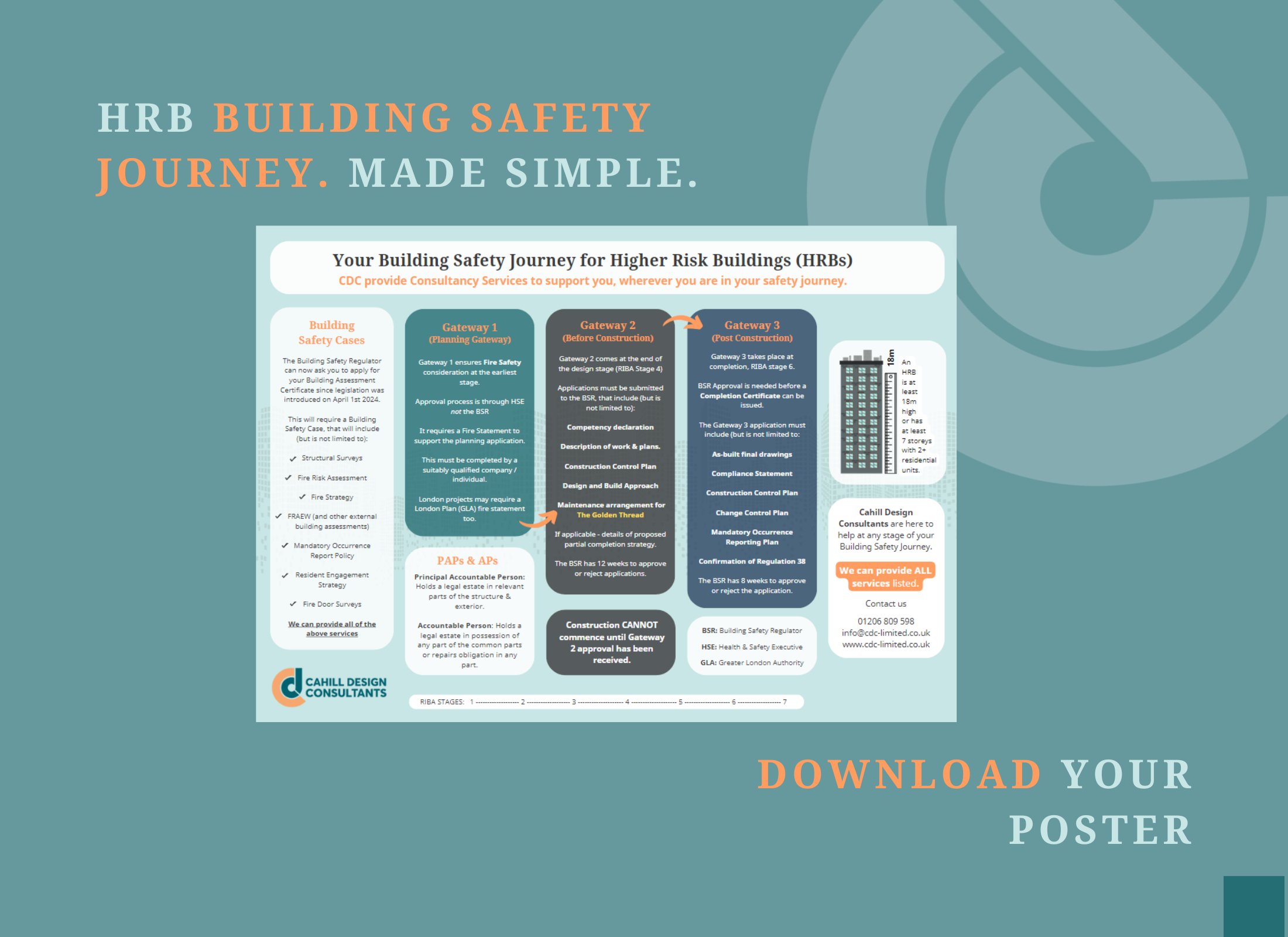
We help clients meet their obligations under the Building Safety Act 2022, preparing Building Safety Cases and supporting Clients with Gateway Applications.
Our expertise also covers compartmentation surveys and wider risk management, ensuring that buildings perform safely and meet all current standards.
With Cahill Design Consultants, you gain a trusted partner who brings clarity, confidence, and technical precision to an increasingly regulated environment.

From initial planning to long-term maintenance, our Building Surveying team provides expertise at every stage of a building’s life.
We can support during the planning, design and construction phases with measured surveys, feasibility advice, and construction monitoring to ensure design intent and quality standards are maintained.
As projects move into operation, we help Principal Accountable Persons (PAPs) and building owners manage performance through reinstatement cost assessments, maintenance planning, and defect diagnosis and other property surveying needs.
By combining technical understanding with practical insight, we help buildings stay compliant, efficient, and resilient throughout their lifespan.
Here are some of the most common questions we’re asked about building surveying work.
A building survey can be useful at several stages of a property’s life.
Before purchasing a property: A survey carried out before exchange can highlight structural or maintenance issues. This helps buyers make informed decisions and may support price negotiations.
For building owners or managers: Periodic surveys can help identify maintenance needs early. This allows planned maintenance rather than reacting to unexpected repairs.
Before refurbishment or alterations: Surveys provide essential information about the building’s existing structure and overall condition. This helps project teams understand constraints before design or construction work begins.
A measured survey records the physical dimensions of a building. It produces accurate plans, elevations and sections that architects and engineers can use as a reliable base for design, refurbishment, or space planning work.
A building condition survey focuses on the state of the property. It identifies defects, maintenance issues, and risks that may affect performance or safety.
While the two surveys often support the same project, they serve different purposes. A measured survey provides accurate dimensional information, while a condition survey provides insight into the physical condition and maintenance needs of the building.
Yes. Building surveyors often work alongside architects, engineers, project managers, and contractors to provide coordinated technical advice.
Their role is to bring insight into building performance, regulatory compliance, and potential risks. This helps the wider team make informed decisions throughout the project.
A surveyor can provide key building data, coordinate with specialist consultants and help resolve issues before they escalate. They can also act as an impartial advisor, ensuring that regulatory and contractual obligations are met.
Early collaboration helps projects run smoothly, reduces delays, and ensures all parties are working from the same reliable information.
Building surveying helps ensure that properties meet current legal and regulatory requirements. This can include fire safety, accessibility, energy performance and obligations under the Building Safety Act.
Surveyors assess the building and identify where it may fall short under current standards. They then provide clear recommendations and help prioritise any remedial work that may be required. They also produce accurate records and documentation that demonstrate due diligence to regulators, investors and occupants.
By addressing compliance issues early, building owners can reduce the risk of enforcement action, costly retrofits, or reputational damage. Building surveyors often act as a practical bridge between regulatory standards and practical implementation.
It is best to involve a building surveyor as early as possible in a project.
Feasibility or concept stage: A surveyor can identify constraints, risks and opportunities that may affect the design, programme, or overall cost.
During construction or refurbishment: They can monitor works to help ensure the project follows the agreed specifications and relevant regulations.
After completion: Surveyors can support ongoing maintenance planning and help manage the long term performance of the building.
Bringing a surveyor into a project too late can mean missed opportunities to resolve issues early. Early involvement helps ensure decisions are based on a clear understanding of the building and its condition.
CDC have been working with the University on a number of difficult schemes, schemes where SKA Gold has been achieved or is being targeted. At all times CDC provided professional and considered advice, fully appreciating project timescales and collaboratively working with the wider project team
David Norman – University of Worcester

















All the latest industry highlights, company insights and project stories.

05 Dec 24
Understanding the roles of a Principal Designer: CDM Regulations vs. Building Safety Act
Read more