
Surveys, testing, and reports are often grouped together under the acoustics umbrella, yet each answers a different question at a different stage of a project.
This guide sets out what each service involves, when you are likely to need it, and how the four can work together across planning, design and construction. It draws on our experience as an integrated consultancy, where early acoustic input makes technical delivery simpler for the whole team.
The difference at a glance
| Service | What it does | Typical reason for needing it | When it usually happens |
Acoustic survey | Measures and describes the existing sound environment on or around a site. | To understand noise affecting a site or and set establish suitable design limits. | Early feasibility |
| Acoustic testing | Checks how a building, system or completed installation performs. | To confirm compliance with Building Regulations, a planning condition or a performance target | Construction and pre-completion |
| Acoustic report | Sets out the findings, assesses them against the relevant criteria and recommends next steps | To support planning, inform design decisions, demonstrate compliance or investigate a problem | Any stage, often alongside the other services |
Most projects need a combination of these services, and work best when planned together from the start. On a residential scheme near a busy road, a survey establishes existing noise levels and sets targets for glazing, ventilation and facade performance. The report supports the planning application, and pre-completion testing later confirms the finished building meets Approved Document E.
What is an acoustic survey or noise survey?
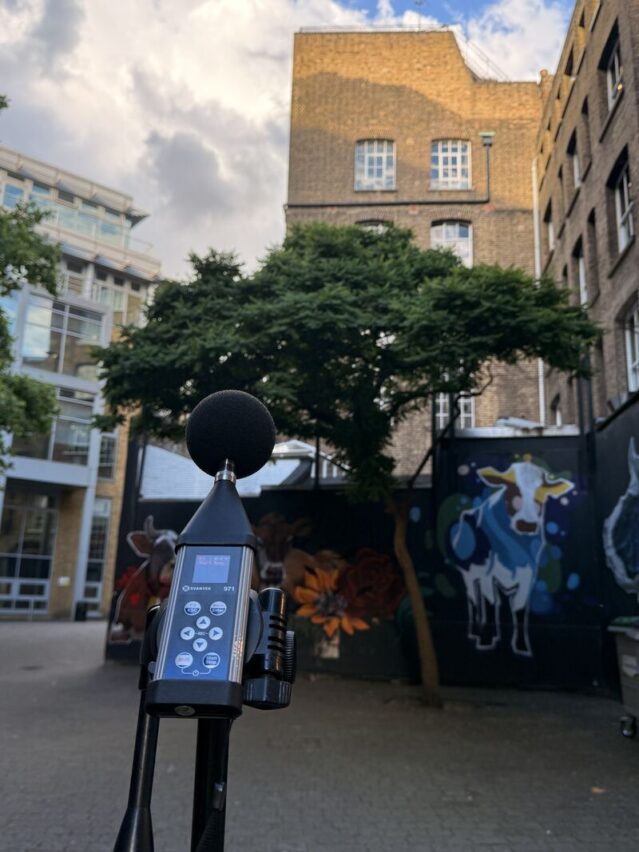
An acoustic survey, sometimes called a noise survey, measures and records the sound conditions at a site. An acoustic consultant visits the location, identifies the main noise sources and takes measurements using calibrated equipment.
The survey might capture road traffic, railway or aircraft noise, nearby commercial activity, entertainment venues or existing building services. Depending on the site, this can involve short attended measurements, longer unattended monitoring over several days and nights, or a combination of both. Because wind and rain affects results, surveys are planned around suitable weather conditions.
The findings are set out in a report that describes the noise climate, identifies any constraints, and establishes design targets. This gives a reliable starting point for a planning application, acoustic design or noise complaint investigation. In simple terms, a survey tells you what noise is already there.
When do you need an acoustic survey?
The most common reason for an acoustic survey is a planning application. If a site sits near a road, railway commercial premises or another noise source, the local authority will usually expect evidence that future occupants will be protected from noise. A survey provides that evidence and shows the design team what they are working with.
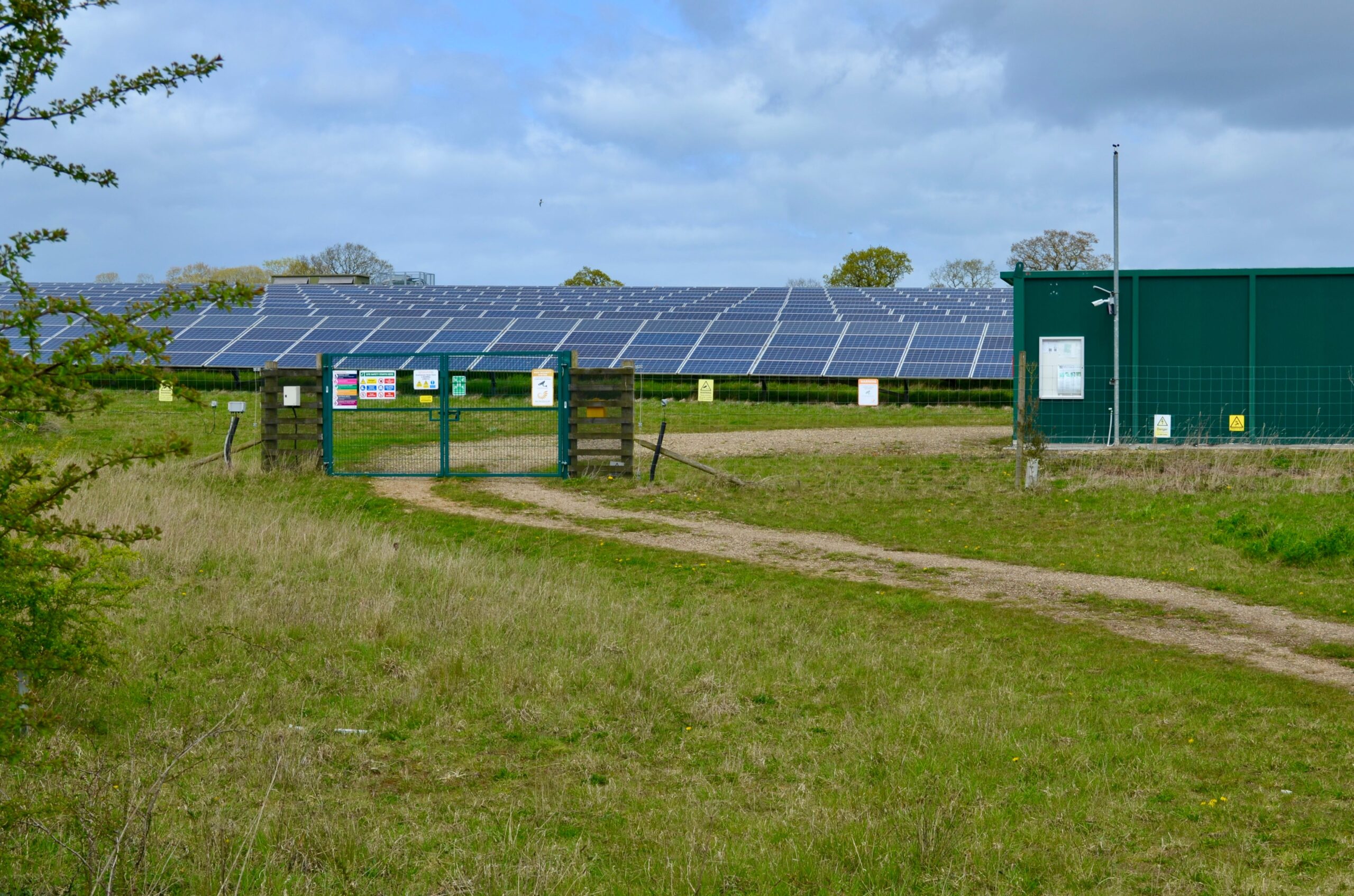
Surveys are also needed when a new plant or equipment is proposed close to homes or other noise-sensitive properties. Measuring the existing background noise allows realistic limits to be set so that the new installation can operate without causing disturbance.
On the design side, facade and building services engineers rely on survey data to set noise for glazing, ventilation and mechanical systems. Without it specifications are based on assumptions that may prove too cautious and costly, or not robust enough.
Finally, a survey is often the first step when investigating a noise complaint. Objective measurements establish whether a problem exists, where it comes from and what action is needed to resolve it.
What is acoustic testing?
Where an acoustic survey looks at the noise already present on a site, acoustic testing checks how something performs once it’s been built or installed. To put it simply, testing tells you how something performs. It measures a building element, room, system or completed installation against a specific target that normally comes from Building Regulations, a planning condition, a recognised standard, or the projects’ own design criteria.
On residential projects, the most familiar example is pre-completion sound insulation testing between homes, which demonstrates compliance with Approved Document E. Schools often require reverberation time testing to confirm classrooms meet BB93, while commercial and mixed-use schemes may need plant noise testing or measurements of internal building services noise.
When do you need acoustic testing?
In many cases, testing is a legal or planning requirement. New homes and residential conversions must pass sound insulation testing under Building Regulations before they can be signed off, and planning permission often comes with conditions that set noise limits for plant, ventilation or commercial uses. Where those limits apply, measurements on site provide the evidence the local authority needs to discharge the condition.
Contractors and developers also commission testing to protect themselves. Verifying a completed installation before handover confirms it performs as specified and provides a clear record should questions arise later. On schemes pursuing specific acoustic targets, test results form part of the evidence that those commitments have been met.
What is an acoustic report?
For many projects, an acoustic report, or noise assessment is the document that matters most to the local planning authority. It takes survey data, test results, calculations or computer modelling and turns them into clear advice, explaining what was assessed, which criteria apply and whether the results are acceptable. Where they fall short, the report sets out the mitigation or design changes needed.
The guidance used depends on the type of project. Assessments of noise affecting new homes commonly draw on BS 8233 and ProPG, while BS 4142 is often used to assess noise from commercial or industrial sources. Choosing the right methodology at the outset matters, as it shapes how the local authority reviews the findings.
How do acoustic surveys, testing and reports work together?
Consider a planning noise assessment for a proposed residential development next to a busy road.
- An acoustic survey measures the existing road traffic noise.
- The consultant uses this data to assess how noise could affect future residents, both inside their homes and in outdoor spaces such as gardens and balconies.
- An acoustic report sets out the glazing, ventilation and facade performance needed and supports the planning application.
- After construction, acoustic testing may be used to verify sound insulation or building services noise.
Whatever the project, the principle stays the same. Gather the right evidence, assess it against the relevant standards and provide a clear route forward that the whole design team can work with.
How CDC can help
CDC provides acoustic surveys, testing and reporting for projects across the UK. We support developers, architects, contractors, building owners and property managers from early feasibility through to completion.
Our acoustic team works alongside our facade, building physics, and fire engineering specialists. This means acoustic advice is coordinated with the wider design from the outset, reducing the risk of conflicting requirements and giving your project team one point of contact for technical questions that often overlap.
Whether you need a planning noise assessment, sound insulation testing, a plant noise assessment, residential façade advice or help investigating a complaint, we can identify the appropriate scope and explain the process in straightforward terms.
Not sure what you need? Tell us about the site, the stage your project has reached and the decision you need to make. We’ll advise whether a survey, testing, a report or a combination of all three is the right approach.
Call us on 01206 809598 or send an enquiry online to discuss your project.