

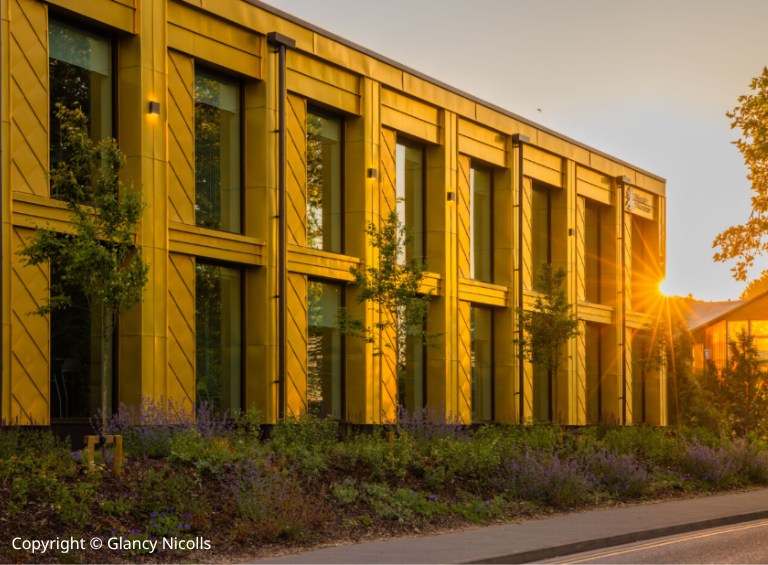
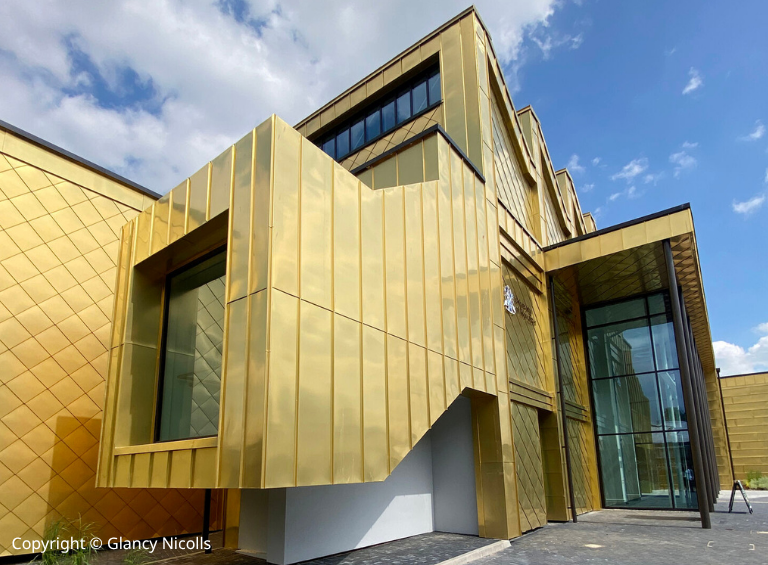
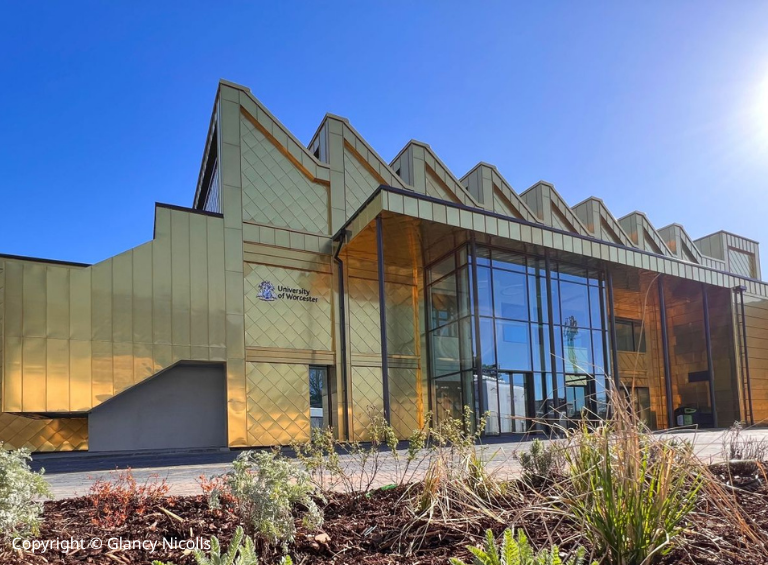
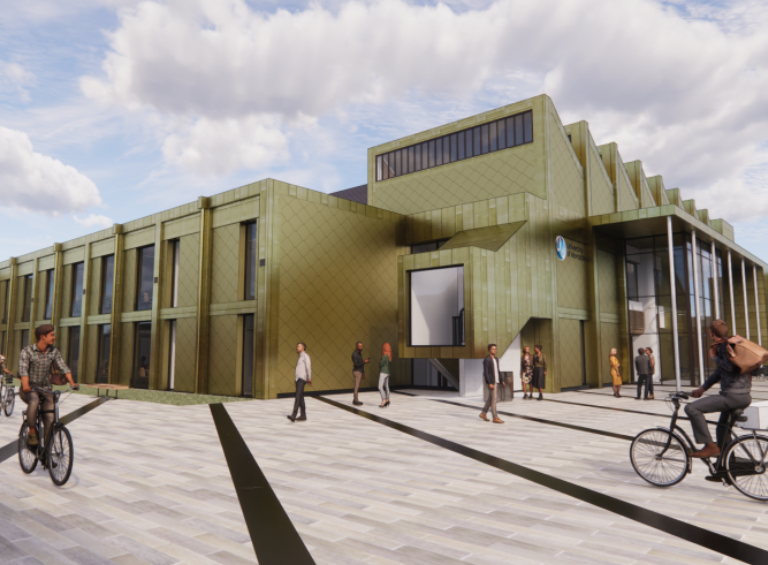
Elizabeth Garrett Anderson Building (formerly Berrows House), University of Worcester
Project Status: Completed
Service: Acoustic Design
Overview
CDC was commissioned by the University of Worcester to undertake a noise assessment and acoustic study for the refurbishment of Berrows House, now known as the Elizabeth Garrett Anderson Building.
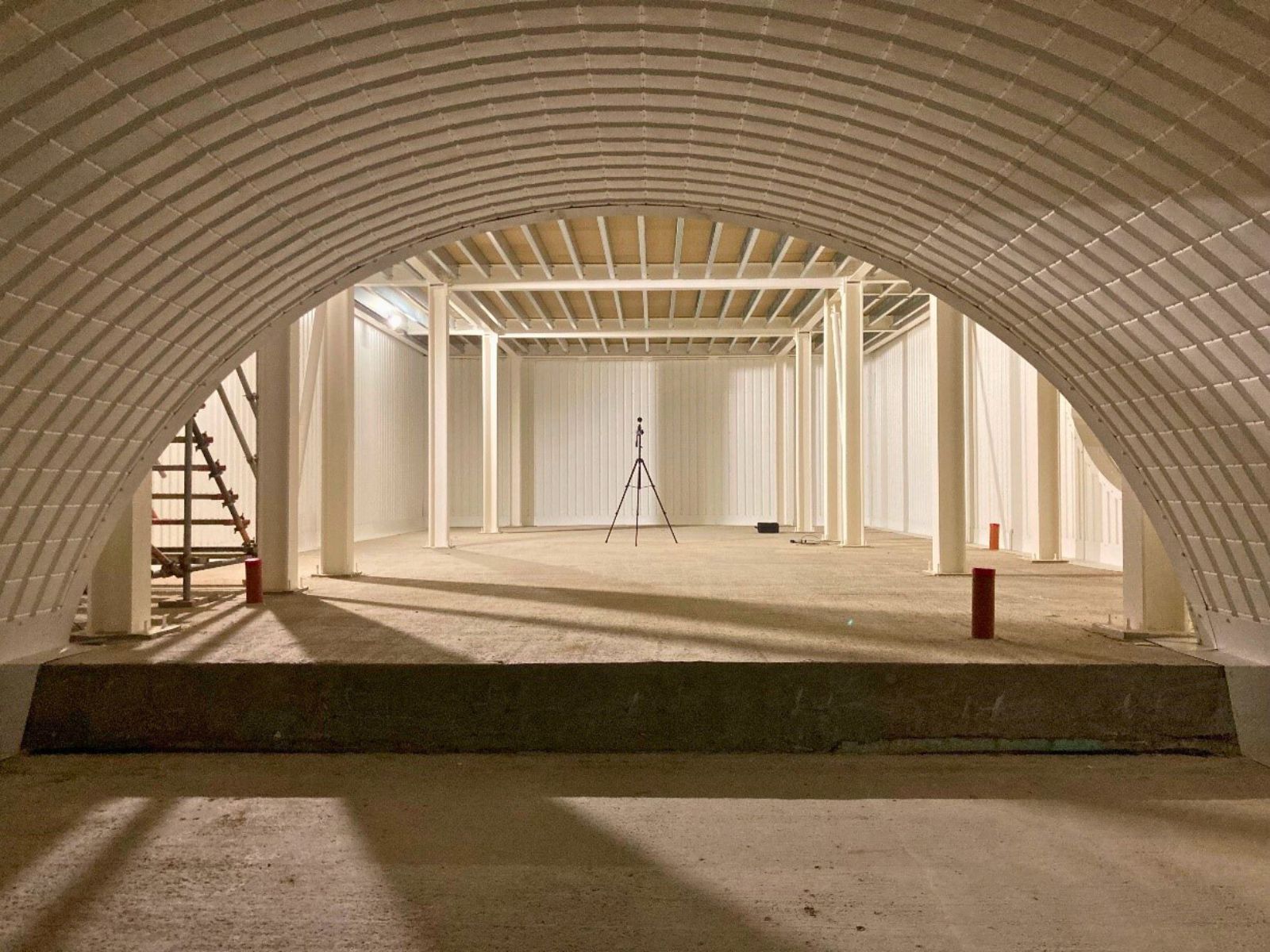
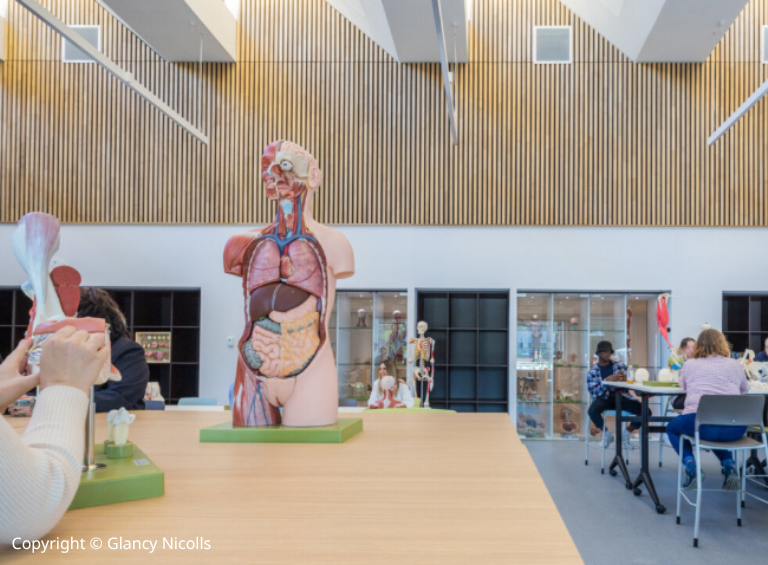
The project involved transforming a former 1960s two-storey building into a modern teaching facility for health and medical students. The development includes teaching areas, simulated GP consultation rooms, staff facilities, an anatomy lab, café and multifunctional breakout spaces.
CDC provided acoustic design advice from early design through to completion, helping the project achieve SKA Gold and supporting high-quality environments for learning and wellbeing.
The challenge
Transforming a former printing facility into a healthcare teaching environment presented several acoustic challenges.
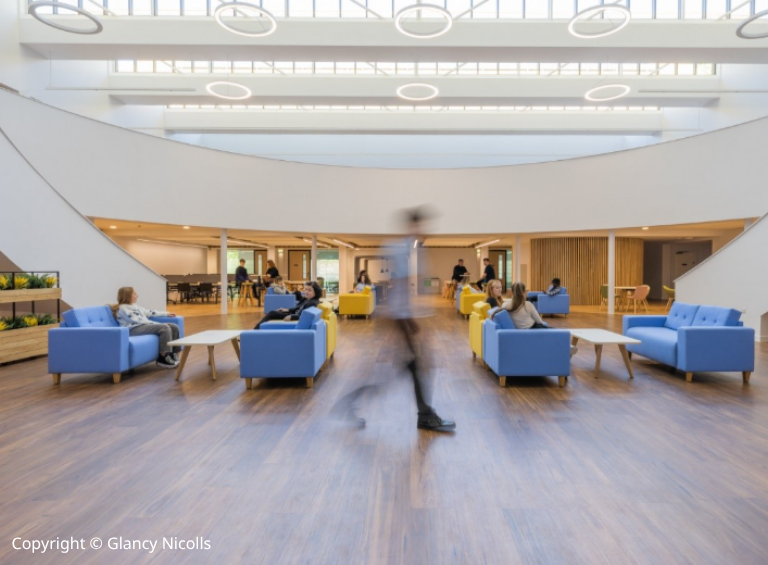
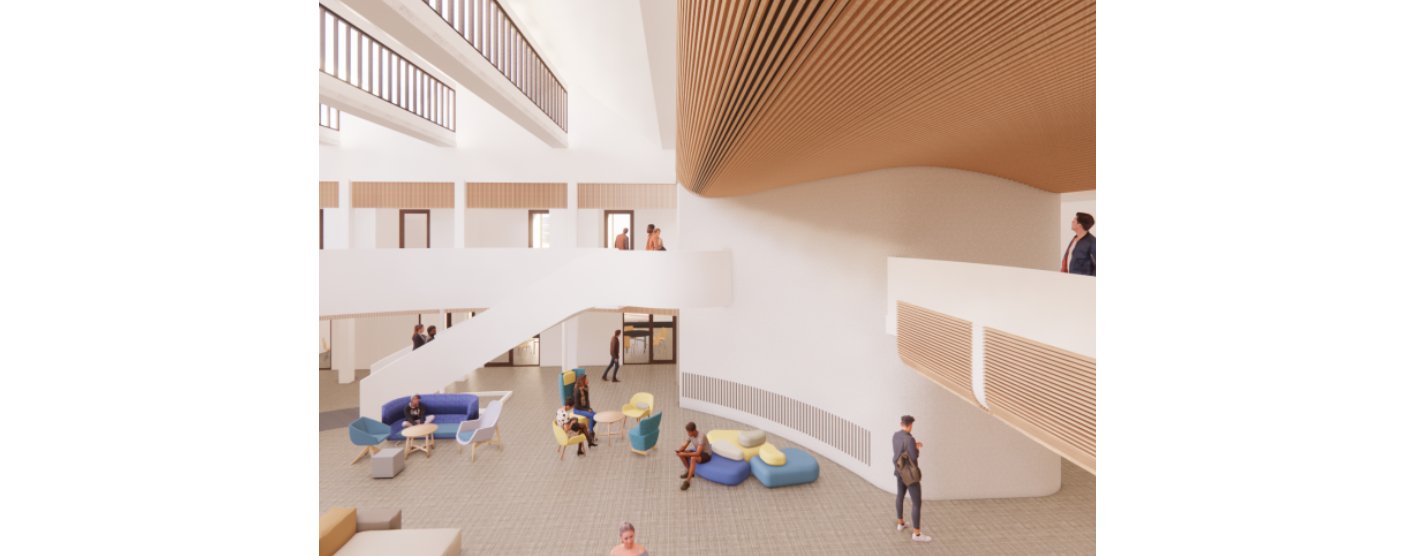
The design centred on open, light-filled spaces with large communal areas and a central atrium. While this created a flexible and welcoming environment, it introduced a risk of noise transfer and poor acoustic conditions for teaching and study.
External noise was also a factor. The site is affected by road traffic, nearby commercial activity and neighbouring receptors including residential properties and a broadcasting studio.
Within the building, constraints such as low ceiling heights and the existing structure made it challenging to coordinate building services without compromising acoustic performance.
Our approach
CDC provided acoustic consultancy from RIBA Stage 2 design review through to construction, maintaining a consistent approach throughout the project lifecycle.
Understanding the environment
We began with a detailed noise survey to assess the existing acoustic environment and inform façade design and internal performance targets.
Design standards and guidance
Although designed for higher education use, we applied BB93 good practice guidance alongside project-specific criteria to ensure appropriate acoustic standards across both teaching and shared spaces.
Design development and modelling
An acoustic review of the Stage 2 design proposals was undertaken, supported by continued input as the design developed.
Due to the inclusion of large open-plan areas, detailed acoustic modelling was carried out to assess noise transfer and ensure adjacent learning environments were not adversely affected.
For external plant, we developed a detailed model incorporating building geometry and equipment to predict noise levels and identify mitigation measures early in the design.
Key solutions
Managing plant noise
Roof-mounted plant presented a particular challenge due to its proximity to noise-sensitive areas and neighbouring properties.
Working closely with the design team, we developed a combination of acoustic enclosures and plant screening that reduced noise while maintaining ventilation performance.
Controlling reverberation in shared spaces
The central atrium was designed as a flexible, multi-use space, requiring careful control of reverberation.
Using 3D modelling, we explored different treatment strategies and developed a solution combining low-level and ceiling-mounted acoustic materials. This delivered a measured reverberation time of 0.9 seconds, improving usability for teaching, events and informal learning.
The design also considered accessibility, helping to create a calmer environment, particularly for those who may be more sensitive to noise.
Maintaining sound insulation performance
Retrofitting services within an existing structure required careful coordination to limit noise transfer between spaces.
We worked closely with the design team to develop detailing that maintained acoustic separation, achieving performance levels exceeding regulatory requirements by 5 dB.
Resolving construction-stage issues
During commissioning, we identified issues with building services operating above design levels, as well as incorrect installation of acoustic attenuators.
Following on-site investigation and coordination with the contractor team, these issues were resolved and final performance targets were achieved.
The outcome
The completed building provides a high-quality teaching environment that balances open, collaborative spaces with the acoustic control required for learning and clinical training.
The project successfully achieved SKA Gold, with acoustic performance forming an important part of the building’s wellbeing strategy.
All acoustic criteria were met at completion, demonstrating the value of early input, detailed modelling and close collaboration throughout the project.
Project team
- Client: University of Worcester
- Architect: Glancy Nicholls Architects
- Contractors: Speller Metcalfe, Stepnell Construction
More Projects